
You didn’t wake up anxious on purpose. Your body just got stuck in a loop — cortisol up, heart racing, mind already spiraling before breakfast.
The wild thing? You can actually interrupt that loop. Quickly. With things you already have at home.


What Is Cortisol, Really?
Cortisol is your body’s main stress hormone. It’s released by your adrenal glands when your brain senses a threat — real or imagined.
A little cortisol is fine. It’s what wakes you up, keeps you alert, helps you move through your day.
The problem is chronic high cortisol. When your nervous system is always “on,” cortisol stays elevated all day, and your body never fully settles. That’s when you start feeling wired and tired at the same time. Anxious about nothing specific. Like you can’t quite exhale.
Your body isn’t broken. It’s just been in survival mode a little too long.

Why Cortisol Gets Stuck High
A lot of things keep cortisol elevated — and most of them are completely normal in modern life. Poor sleep. Skipping meals. Doomscrolling first thing in the morning. Chronic loneliness. Low magnesium. Too much coffee on an empty stomach.
Your nervous system can’t tell the difference between a work deadline and a lion chasing you. It responds the same way to both.
That’s not a weakness. That’s just how the wiring works.
10 Simple Ways to Lower Cortisol Naturally
These aren’t long rituals. Most take under 10 minutes. Some take under 60 seconds. The research behind them is real — and the shifts you feel in your body are even more real.
1. Magnesium Water
Magnesium is one of the most important minerals for stress regulation, and most of us don’t get nearly enough.
Research has connected low magnesium to elevated cortisol and heightened anxiety responses. When your cells have enough magnesium, your nervous system can actually calm down — not just mask the stress, but genuinely settle.
A simple way to start: dissolve a scoop of magnesium glycinate or citrate powder in a glass of water. Drink it in the morning or before bed. That’s it.

2. Morning Sunlight
Just stepping outside in the morning — without sunglasses, for even five minutes — does something for your body that no supplement can replicate.
Morning light hits receptors in your eyes that signal to your brain: it’s daytime, we’re safe, reset the clock. This anchors your circadian rhythm, which regulates when cortisol peaks and when it falls. When your rhythm is off, cortisol stays dysregulated all day.
Open the door. Stand in the light. Let your eyes adjust. That’s it.
3. Ginger Tea
There’s something about the ritual of making ginger tea that’s calming on its own — but the actual root does a lot of work too.
Ginger has anti-inflammatory properties, and chronic inflammation and high cortisol tend to drive each other in circles. Breaking that cycle with something gentle and warm feels different than reaching for another coffee.
Slice a few pieces of fresh ginger, steep in hot water for five minutes, add honey if you want. Slow sip. No scrolling while you drink it.

4. Cold Water Splash
This one sounds aggressive. It isn’t.
Splashing cold water on your face — just 10 seconds — activates the diving reflex, a physiological response that slows your heart rate and stimulates the vagus nerve almost instantly. The vagus nerve is the main pathway of your parasympathetic nervous system (the “rest and digest” side that cortisol suppresses).
You don’t need a cold plunge. You need a sink and 10 seconds of willingness.
5. Dark Chocolate (70%+)
Not all chocolate. The good stuff.
Dark chocolate above 70% cacao contains flavonoids that research has linked to lower cortisol and improved mood. It also supports serotonin production, which is essentially the opposite of what cortisol does to your brain chemistry.
One or two squares. Not half a bar, not out of stress — just 1-2 squares, intentionally, as a small act of care.
6. Nasal Breathing
When you’re stressed, you shift to shallow mouth breathing almost automatically. It happens without you noticing. And it keeps your nervous system in fight-or-flight because the body reads that pattern as danger.
Switching to slow nasal breathing — even for one minute — changes the carbon dioxide balance in your blood, improves oxygen delivery to the brain, and sends a direct signal to your nervous system that the threat is gone.
Try box breathing: inhale through your nose for 4 counts, hold for 4, exhale for 4, hold for 4. One minute. You’ll feel it immediately.
7. Grounding (Barefoot on the Ground)
This one still surprises people who haven’t tried it.
Walking barefoot on grass, soil, or sand — called grounding or earthing — has been studied for its effect on inflammation and cortisol. Direct skin contact with the earth transfers electrons that act as antioxidants in the body. Beyond the science, there’s something deeply settling about feeling the ground under your feet. Like your nervous system remembers it.
Ten minutes outside, barefoot. That’s all.

8. Laughing or Smiling (Even Fake at First)
Your brain doesn’t fully distinguish between a real smile and a forced one at first — and it doesn’t fully care.
The muscles involved in smiling trigger a feedback loop that signals to your brain that you’re safe. Endorphins release. Cortisol drops. Studies have shown even 30 seconds of laughter measurably lowers stress hormones.
Watch something funny. Call someone who makes you laugh. Put on a voice memo of your kid giggling. Let yourself go there.
9. Tart Cherry Juice
Tart cherry juice is one of the more underrated tools in the cortisol conversation.
It contains melatonin and antioxidants that support the body’s rest signaling — helping it shift into “recovery mode” rather than staying alert. It’s particularly useful in the evening, when cortisol is supposed to be falling but so often doesn’t.
A small glass an hour before bed. It genuinely helps.
10. Humming
Sixty seconds of humming. That’s it.
Humming vibrates the vagus nerve through the diaphragm and throat, activating the parasympathetic response more directly than most breathing exercises. It’s one of those things that feels slightly ridiculous until you notice how much calmer you feel after.
Hum a song you love. Hum nothing in particular. Just hum while you wash dishes or fold laundry. Let your body do the rest.
If You Want a Real System for This
These tools work. But knowing about them and actually building them into your daily life are two different things.
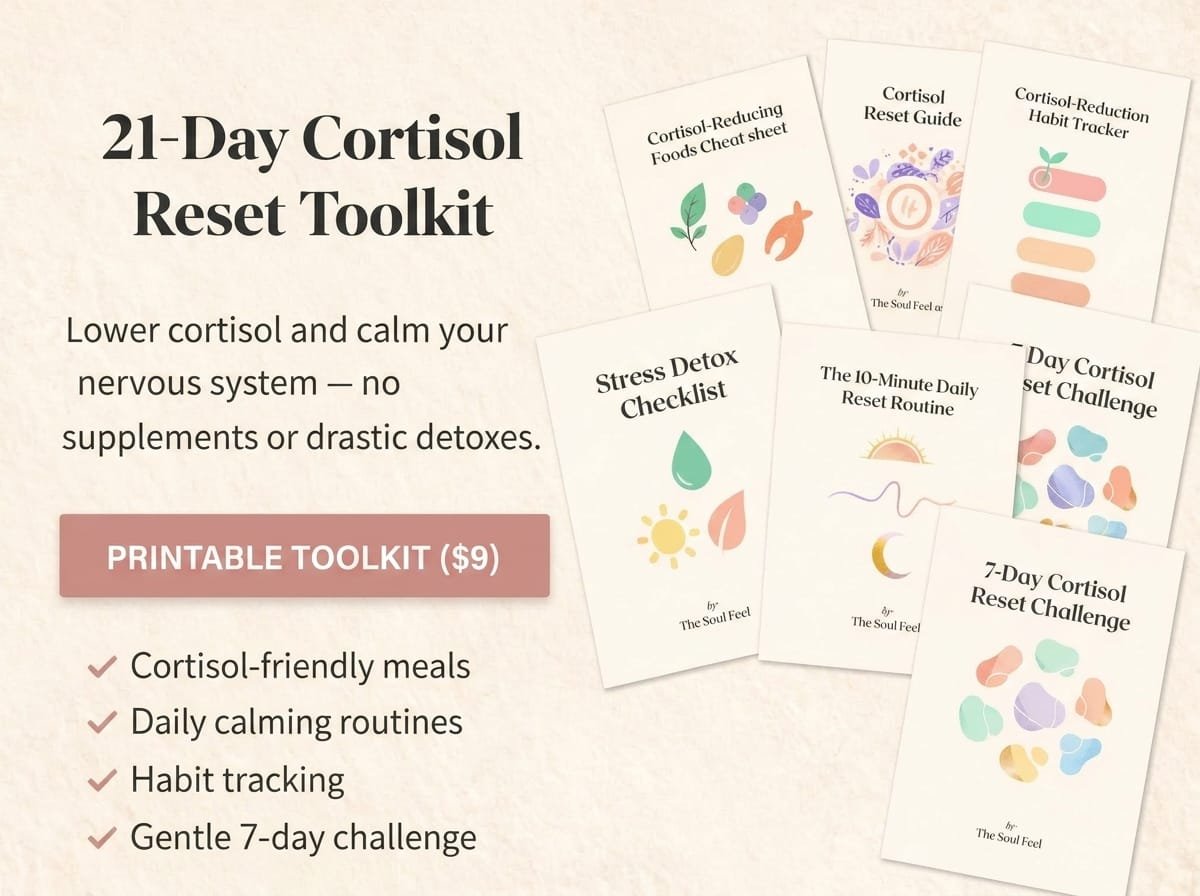
If you want something that actually structures this for you — without supplements, without complicated protocols, without needing an hour a day — I put together the 21-Day Cortisol Reset Toolkit for exactly this.
It includes a full 30+ page guide, a 7-day meal plan, a daily habit tracker, morning and evening routines, and a stress detox checklist. Everything is beginner-friendly, designed for 5–10 minutes a day, and comes as an instant PDF download you can print or use on your phone.
If you don’t feel calmer within 21 days, the refund is yours. No questions.
How to Start Today
You don’t need all ten. You need one.
Pick the one that feels most accessible right now:
- Morning person? Step outside for sunlight before checking your phone.
- Struggling to sleep? Tart cherry juice an hour before bed.
- Anxious at your desk? One minute of nasal breathing.
- Just need a reset mid-day? Cold water splash on your face.
Start there. Build from there. Slow is steady.

Quick Answer
Cortisol can be lowered naturally through small daily habits that calm the nervous system: morning sunlight, magnesium water, nasal breathing, cold water splashes, grounding, tart cherry juice, ginger tea, dark chocolate, humming, and smiling. Most take under 10 minutes. Consistency matters more than perfection.
As always, chat with your doctor or healthcare provider for guidance specific to your body — especially if you’re dealing with a diagnosed cortisol condition.
You’re not doing this alone. And you’re closer than you think.
With love ♡