
Feeling wired but tired? If your days feel foggy and your nights feel too awake, learning how to balance cortisol naturally can help. I’ve been there too, trying to figure out why mornings feel heavy and nights feel buzzy. This gentle guide shows you what’s happening and how to shift it with small, doable changes.
What Is Balance Cortisol Naturally?

Balancing cortisol naturally means teaching your body to follow its normal daily rhythm again. Cortisol should rise after waking, then fall slowly toward night. When that pattern gets flipped or flattened, everything feels off. Energy. Mood. Sleep. Even appetite.
Why Your Rhythm Breaks and Why It Matters
Chronic stress, late nights, perfectionism, emotional overload, and gut imbalance can scramble your cortisol timing. You might feel tired all morning, restless at night, and hungry for sugar all day. When the rhythm is out of sync, your body loses its internal cues. The good news? Small, gentle habits help.
Best Ways to Balance Cortisol Naturally
1. Morning Sunlight Within an Hour of Waking
Morning light tells your brain it’s time to rise. It kickstarts a healthy cortisol surge that sets your whole day’s rhythm.
Try stepping outside for 5–10 minutes before your first message or scroll.

2. Delay Caffeine for Smoother Energy
If you drink coffee too early, it stacks on top of your natural cortisol peak and creates a crash later.
Try waiting 90 minutes before your first cup. Sip warm water or tea first.
3. Time Your Meals to Support Hormones
When you eat affects cortisol too. Constant snacking keeps stress hormones slightly elevated.
Try a simple eating window like 8am–6pm. No pressure. Just structure.
4. Choose Gentle, Regular Movement
Moderate movement calms long-term cortisol. Slow walks, yoga, and light strength sessions tell your body it’s safe.
Aim for 20–30 minutes of gentle movement most days.

5. Use Short Nervous System Tools
Breathing shifts your body from “fight-or-flight” to “rest-and-digest.”
Try 4-7-8 breathing tonight. Four slow cycles. That’s enough.
6. Stabilize Blood Sugar With Protein and Fiber
Sugar spikes trigger cortisol spikes. Stable blood sugar supports calmer hormones.
Add a simple protein—an egg, yogurt, nuts—to your first meal.
7. Protect Sleep With a Soft Evening Routine
Irregular nights confuse your internal clock. Pick a wake time, stick to it, and wind down early.
Try turning screens off one hour before bed.

8. Nourish the Gut to Calm Stress Signals
Your gut talks to your brain. When it’s balanced, inflammation goes down and cortisol follows.
Add small servings of fermented foods or fiber-rich veggies during the week.
9. Allow Space for Small Emotional Releases
Unprocessed stress or grief can keep cortisol high. Feeling things gently matters.
Try a 3-minute journal note at night. Nothing fancy. Just honest.
10. Use a Short Guided System if You Need Structure
A structured plan can make everything easier. Tiny steps. Clear routines. Zero overwhelm.
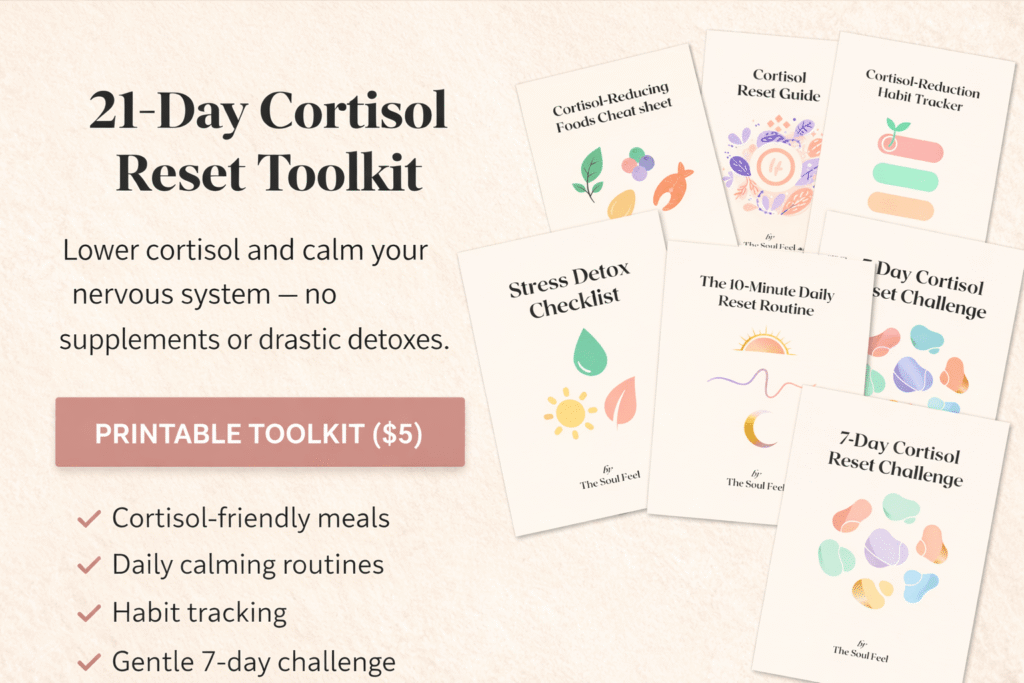
I created something for this purpose: the 21-Day Cortisol Reset Toolkit. It’s a simple, beginner-friendly system that uses food, timing, sleep cues, nervous system support, and micro-habits to gently restore your cortisol rhythm. I used it during a messy, burnout-heavy season of my life… and by the end of week one, evenings felt softer. By week three, mornings felt lighter again.
If you want a guided, printable routine that fits busy days, the link is here:
👉 21-Day Cortisol Reset Toolkit for Stress Relief & Hormone Balance
How to Start Today
Start with tiny steps:
– Step outside within 30 minutes of waking.
– Delay caffeine by 90 minutes.
– Pick a consistent wake time this week.
– Try 4-7-8 breathing tonight.

Quick Answer
To balance cortisol naturally, get morning sunlight, delay caffeine, eat at steady times, use gentle breathwork, and keep sleep consistent. These simple shifts retrain your cortisol rhythm and help calm both morning fatigue and nighttime restlessness. Check with your healthcare provider for personal guidance.
Conclusion
Balancing cortisol naturally doesn’t require perfection. Just small, loving habits done consistently. Start with one or two steps this week and let your rhythm soften back into place. You deserve steadier days and calmer nights.