
If you’ve been wondering why your body feels stuck in stress mode, you’re not alone. That wired-but-tired feeling can make even a normal day feel heavy in your bones. I’ve been there too — lying awake at 2 a.m., heart buzzing, mind racing, begging my body to calm down.
This guide gently explains what’s happening inside you and how to find your way back to balance.

What Is Stress Mode?
Stress mode is when the body keeps releasing cortisol even when the stressful moment is long gone.
It’s your nervous system stuck in “protective mode” instead of “rest mode”.
Sometimes it happens because the body’s normal cortisol shut-off system stops working. A long-tail variation for clarity: “why my cortisol stays high even when I’m not stressed.”
Why Your Body Feels Stuck in Stress Mode
There are real biological loops that trap the body in high cortisol.
And none of them mean you’re weak or dramatic. They mean your system is overwhelmed.
Here’s a gentle look at what’s happening.
The Real Reasons Cortisol Won’t Come Down

1. The Broken Feedback Loop
Your body normally has an “off switch” for cortisol.
But chronic stress damages the receptors that listen for the “stop now” message.
So your brain never gets the memo.
It’s not your mindset.
It’s biology trying its best.
Try today: Sit in a quiet corner for one minute. Place your hand on your chest. Just notice the rise and fall.
2. The Inflammatory Trap
Cortisol should calm inflammation.
But when stress is constant, your immune cells stop listening to cortisol too.
Inflammation stays high.
Cortisol stays high.
Both fuel each other.
It’s a loop that feels impossible to break (I used to feel this buzzing in my shoulders daily)).
Try today: A warm cup of ginger tea after lunch. Warmth + anti-inflammatory herbs = tiny shift.
3. Amygdala Fear Lock
High cortisol makes emotional memories stick.
Your threat detector (the amygdala) becomes hyper-alert — scanning for danger even in a calm room.
At the same time, the hippocampus (your “it’s okay now” center) shrinks.
This makes rumination feel automatic.
Try today: One grounding sentence. “I am safe in this moment.” Whisper it softly.
4. Blood Sugar Chaos
Cortisol raises blood sugar for quick energy.
But when cortisol stays high, insulin struggles to keep up. The crashes feel awful, so the body releases more cortisol as a “rescue.”
Hello mood swings and 4 p.m. cravings.
Try today: Add protein to your breakfast. Even a boiled egg helps stabilize the roller coaster.
5. The Sleep-Cortisol Prison
High cortisol disrupts sleep.
And poor sleep increases cortisol.
You wake up tired. Wired. Foggy.
And then the cycle continues.
Try today: One small wind-down ritual. Dim the lights 30 minutes earlier.
6. Nutrient Depletion Spiral
Constant cortisol burns through magnesium, B vitamins, vitamin C, and zinc.
These are the nutrients that actually calm the nervous system.
Without them, your body can’t switch gears.
It’s not willpower.
It’s depletion.
Try today: Add leafy greens or a squeeze of lemon to your dinner.

7. Real-Life Stressors That Won’t Let Go
Loneliness. Money worries. Uncertain routines.
These aren’t “mindset issues”.
Your body reads them as real threats.
Meditation helps, yes.
But it can’t override ongoing instability.
Try today: Send one message to someone you love. Tiny connection = tiny shift.
8. Gut Barrier Breakdown
Chronic stress weakens the gut lining.
Inflammatory molecules slip into the bloodstream and trigger more cortisol.
The gut and brain talk constantly — and stress makes their conversations messy.
Try today: Add one fermented food to your plate (yogurt, pickles, kefir).
9. Anticipatory Anxiety
“What if…?” thoughts make the brain behave like the threat is happening right now.
Every worst-case thought = a mini cortisol spike.
The brain becomes its own stressor.
(I lived this cycle for years without even noticing it creeping in.)
Try today: Write down one anxious thought. Then write one gentler version of it.
Best Tips to Ease Stress Mode (Gently & Slowly)
1. Support the Cortisol “Off Switch”
Soft routines calm the HPA axis.
Your body loves predictable rhythms.
A slow morning with warm light helps reset that broken loop.
Try this: Wake and stretch before touching your phone. Just 20 seconds.
2. Stabilize Blood Sugar
Balanced energy = fewer cortisol spikes.
Steady glucose supports mood, focus, and cravings.
Try this: Combine carb + protein + fat at one meal today.
3. Relax the Amygdala
Your threat detector needs safety cues.
Warmth. Slowness. Gentle touch.
Try this: Place a warm hand on your belly when anxious.
4. Lower Inflammation
Anti-inflammatory foods send calming messages through the whole body.
Try this: Olive oil drizzle on your lunch salad.
5. Rebuild the Gut
Your digestive system is a major cortisol regulator.
Try this: Add fiber to one meal today — oats, lentils, or fruit.
6. Replenish Depleted Nutrients
Stress drains magnesium and B vitamins.
Try this: Add a magnesium-rich food tonight — pumpkin seeds or spinach.
7. Improve Sleep Gently
No need for perfection.
Just soften the edges of your night.
Try this: Put your phone across the room before bed.

8. Use a Guided Cortisol Support Kit
A little structure can feel like safety.
Especially when your mind feels foggy and your body keeps buzzing.
A supportive guide brings clarity to your day and shows you which habits actually calm the cortisol loop.
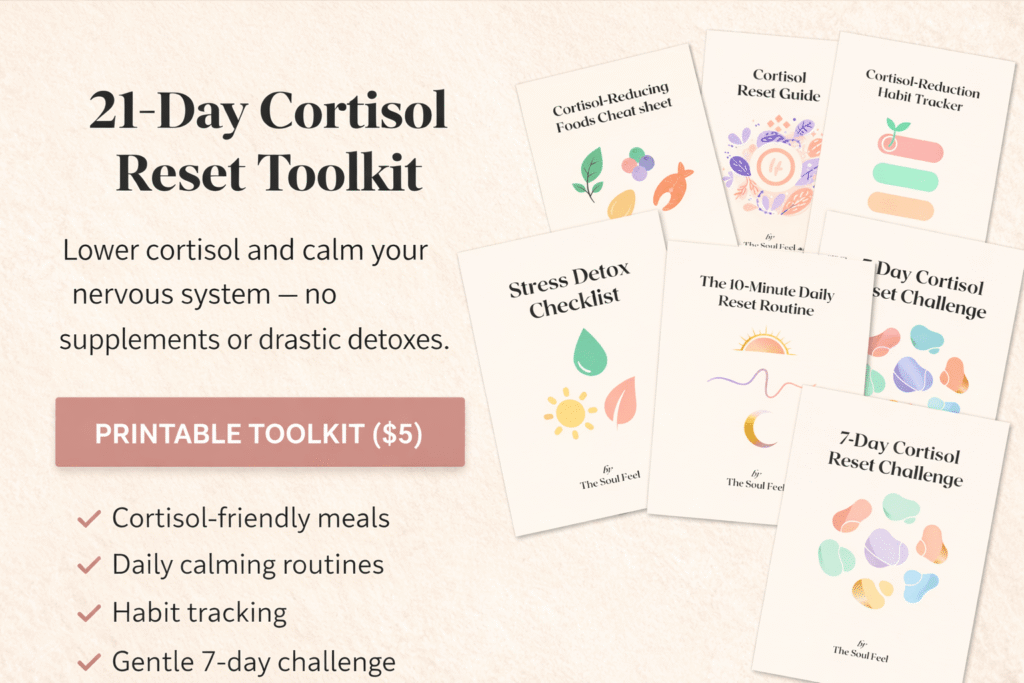
Try this: Explore the 21-Day Cortisol Reset Toolkit for Stress Relief & Hormone Balance.
Grounding exercises, diet guidance, gentle routines, and calming practices you can start today.
9. Create Small Windows of Safety
Tiny moments of peace break the cortisol loop.
Try this: A two-minute walk outdoors after dinner.
How to Start Today
- Pick one small habit, not five.
- Add it to something you already do (habit stacking).
- Keep it gentle.
- Keep it doable.
- Keep checking in with how your body feels.
Check with your healthcare provider for personalized advice.
Quick Answer
Why your body feels stuck in stress mode: Cortisol stays high when the body’s stress-regulation system breaks down from chronic pressure. Damaged cortisol receptors, inflammation, poor sleep, blood sugar spikes, and anxiety loops keep the stress response active. Supporting sleep, stabilizing blood sugar, and calming the nervous system helps lower cortisol.

Conclusion
If you’ve been asking yourself why your body feels stuck in stress mode, know that your body isn’t failing — it’s protecting you the only way it knows how.
Small, steady habits help the cortisol loop unwind. Start with one. Feel the shift. Let it build.
With love — and calm moments ahead.))