
Have you ever felt “off” in a way you can’t explain? Many women search for answers without realizing the symptoms of high cortisol are behind the exhaustion, bloating, puffy face, and wired-at-night sleep. It’s subtle. It builds slowly. But it changes everything. I’ve felt that exact fog, and understanding it changed the way I cared for myself.
What Are the Symptoms of High Cortisol?
High cortisol symptoms show up quietly. They blend into everyday life. The stubborn belly that won’t shrink. The fragile skin. The random breakouts. The endless fatigue. They feel like personality changes or stress, not hormones. Many women even search for early signs of cortisol imbalance because the symptoms feel so confusing at first.
Why It Happens
Chronic stress pushes cortisol far beyond its natural rhythm. When it stays high, it disrupts digestion, sleep, mood, skin, and energy. Your body shifts into survival mode. Nothing feels steady. Nothing feels predictable. And when cortisol stays elevated too long, the effects touch everything from metabolism to emotional balance.

Best Tips to Ease High Cortisol Symptoms
Support Your Cortisol Curve
When cortisol spikes at the wrong time, mornings feel heavy and nights feel wired. Your body loses its natural rhythm. A gentle reset helps restore balance. One small thing helps a lot: open your curtains within ten minutes of waking to anchor your internal clock.
Calm Cortisol Belly
Cortisol pushes fat toward your midsection while thinning muscle elsewhere. It feels unfair. And blood sugar swings make it worse. A stabilizing breakfast helps everything. Try adding one protein-rich breakfast this week, like a simple chia pudding with berries.

Reduce Inflammation
Breakouts, redness, flare-ups—cortisol drives them all. I’ve seen it in my own life. My skin looked tired long before I understood the root cause. Gentle anti-inflammatory foods make a difference. Add one food today like berries, olive oil, or avocado.
Support Your Nervous System
High cortisol keeps the body in constant alert mode. When your nervous system feels safe, cortisol finally drops. A tiny habit helps: try a slow 60-second exhale before bed.
Restore Better Sleep
Light, choppy sleep is a classic cortisol symptom. Once sleep suffers, cortisol rises even more. Soft evening lighting helps your brain switch gears. Dim your lights ninety minutes before bed and create a warm, cozy glow.
Protect Your Gut
Cortisol slows digestion and increases gut sensitivity. Bloating, constipation, random discomfort—it’s all connected. One gentle support: warm lemon water or ginger tea in the morning.
Strengthen Muscles
High cortisol breaks muscle down for quick energy. That’s why your legs feel weaker during stressful seasons. Gentle strength helps shift your body back to balance. Try a few slow bodyweight squats today.

Ease Emotional Ups and Downs
Cortisol quiets the logical part of the brain and amplifies the emotional alarm system. Small things feel big. Calm feels hard to reach. A grounding gesture helps bring the body back: place your hand on your chest and breathe slowly once today.
Steady Your Blood Sugar
Sugar cravings are a hormonal response—not a willpower issue. Cortisol amplifies cravings for comforting foods. Stabilizing meals help cravings fade. Add a fat or protein to every snack.
Try a Structured 21-Day Reset
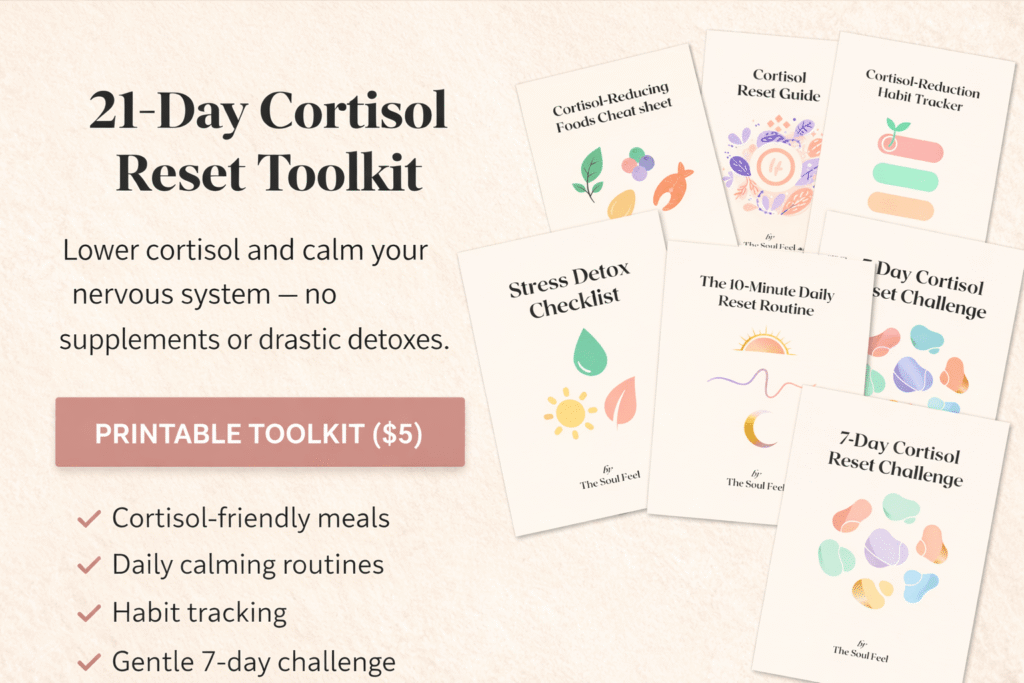
Sometimes scattered tips aren’t enough. A clear, gentle plan can feel like such a relief. The 21-Day Cortisol Reset Toolkit offers an easy, printable system to calm your stress hormones through food, daily habits, soothing routines, and tiny shifts that fit into real life. It includes a full guide, meal plan, grocery lists, routines, trackers, and a simple step-by-step reset.
If you want a loving structure to follow, this gives you everything without the overwhelm.
👉 21-Day Cortisol Reset Toolkit for Stress Relief & Hormone Balance
How to Start Today
Eat a protein-rich breakfast within one hour of waking.
Step into morning sunlight for a few minutes.
Add one calming evening ritual like breathwork or a warm shower.
Remove one stress trigger from your day, like late-night scrolling or constant notifications.

Quick Answer
Symptoms of high cortisol include stubborn belly fat, fatigue, acne, puffy face, sleep issues, cravings, mood swings, and digestive problems. These signs appear when stress hormones stay elevated too long. Simple calming habits, balanced meals, and gentle nervous system practices help reduce cortisol naturally.
Conclusion
Understanding the symptoms of high cortisol helps you finally see the pattern your body has been whispering about for months. These signs aren’t personality flaws. They’re invitations to slow down, nourish yourself, and rebuild your stress rhythm. Start with one small shift today—and if you want a guided reset, the 21-day toolkit will support you through every step.