
For a long time, I thought I was just tired.
Not sick.
Not burnt out.
Just… coping.
I got through my days.
Showed up when I had to.
Rested when I could.
Nothing felt extreme — until it did.
The Signs I Normalized for Years
Looking back, the signs were there.
They just didn’t feel dramatic enough to worry about.
Things like:
- waking up already tired
- feeling on edge for no clear reason
- needing caffeine just to feel functional
- craving sugar or salty snacks
- feeling inflamed or puffy
- trouble sleeping even when exhausted
I told myself this was normal.
It wasn’t.
A Quick Pause (If This Feels Familiar)
If these signs feel familiar, cortisol imbalance may be involved.
I later created a gentle 👉 21-Day Cortisol Reset Toolkit to support stress hormones through simple food habits, daily routines, and nervous-system care (no supplements, no extreme protocols).
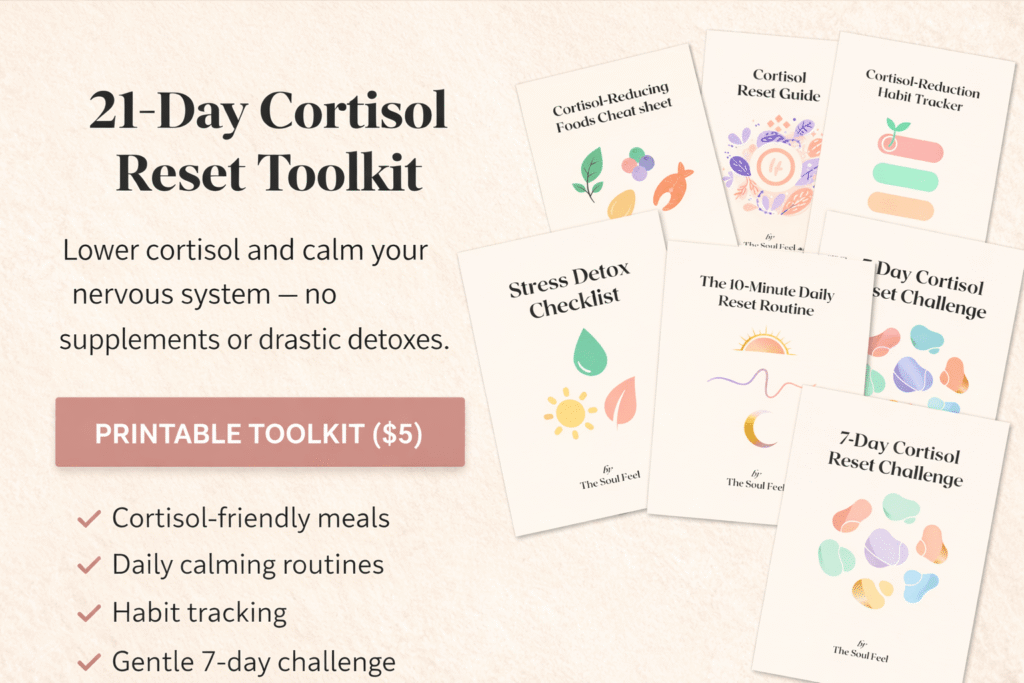
You don’t need it to keep reading — but if structure helps you feel less overwhelmed, it’s there.
Now let’s talk about why these signs are easy to miss.
Why High Cortisol Often Goes Unnoticed
High cortisol doesn’t always feel like panic or chaos.
Often, it feels like:
- functioning on autopilot
- pushing through tiredness
- being “high-functioning but drained”
Because it builds slowly, your body adapts.
And adaptation can look like normal.
When Stress Becomes the Baseline
Chronic stress doesn’t always announce itself.
It quietly changes:
- how you sleep
- how you eat
- how you recover
- how safe your body feels
When cortisol stays elevated:
- energy becomes inconsistent
- inflammation increases
- sleep quality drops
- emotional resilience decreases
But because this happens gradually, it’s easy to ignore — until your body can’t anymore.
The Moment My Body Forced Me to Pay Attention
For me, the crash wasn’t dramatic.
It was subtle but unmistakable.
I couldn’t recover from stress the way I used to.
Rest didn’t feel restorative.
Small things felt overwhelming.
That’s when I realized:
These weren’t random symptoms.
They were signals.
What Helped Me Recognize the Pattern
Once I stopped minimizing my symptoms, things started to make sense.
I noticed:
- stress made everything worse
- sleep mattered more than I thought
- food timing affected my energy
- daily routines influenced my mood
This awareness is what later shaped my Cortisol Reset Toolkit — because most of us don’t need more information, we need help noticing patterns.
Why Early Support Matters
You don’t need to wait for a crash to care for your stress response.
Supporting cortisol early helps:
- prevent burnout
- reduce inflammation
- improve sleep
- restore emotional steadiness
The earlier you respond, the gentler the process can be.
If You’ve Been Telling Yourself “It’s Fine”
Please pause.
Functioning doesn’t mean thriving.
Coping doesn’t mean balanced.
If your body has been whispering, you don’t have to wait for it to scream.
A Gentler Way Forward
If subtle signs have been showing up:
- stop brushing them off
- stop telling yourself it’s normal
- start supporting your stress response
Listening early is an act of self-respect.
Optional Support
If you want a calm, printable way to support cortisol balance and reconnect with your body’s signals, my 👉 21-Day Cortisol Reset Toolkit includes:
- gentle daily routines
- cortisol-friendly food guidance
- nervous-system support
- habit tracking for stress, sleep, and energy
Use it slowly. No pressure.