
Ever wonder why you feel calm one moment… then wired and shaky the next? A cortisol reduction diet can help stabilize those swings, especially when stress feels like it’s living inside your body. I’ve been there too — foggy mornings, restless nights, sugar cravings. This guide walks you through simple, nourishing shifts that support your hormones gently. And yes… they’re realistic for busy days.
What Is a Cortisol Reduction Diet?
A cortisol reduction diet is a gentle, whole-food eating style that helps balance your stress hormone through steady blood sugar, gut support, and better nervous system regulation. It focuses on calm meals, not restrictive rules. Many women also search for foods for reducing cortisol naturally, and this approach fits perfectly — it’s slow-living, grounding, and easy to follow.
Why Cortisol Spikes Happen
Cortisol rises when your blood sugar crashes, when meals are skipped, or when stress piles up. It’s your body’s way of keeping you alive… but when the rhythm is off, everything feels harder. A cortisol reduction diet works because it brings your body back into a natural flow: steady energy, steadier moods. Even small shifts, like eating every 3–4 hours, calm those surges.
Best Cortisol Reduction Diet Tips
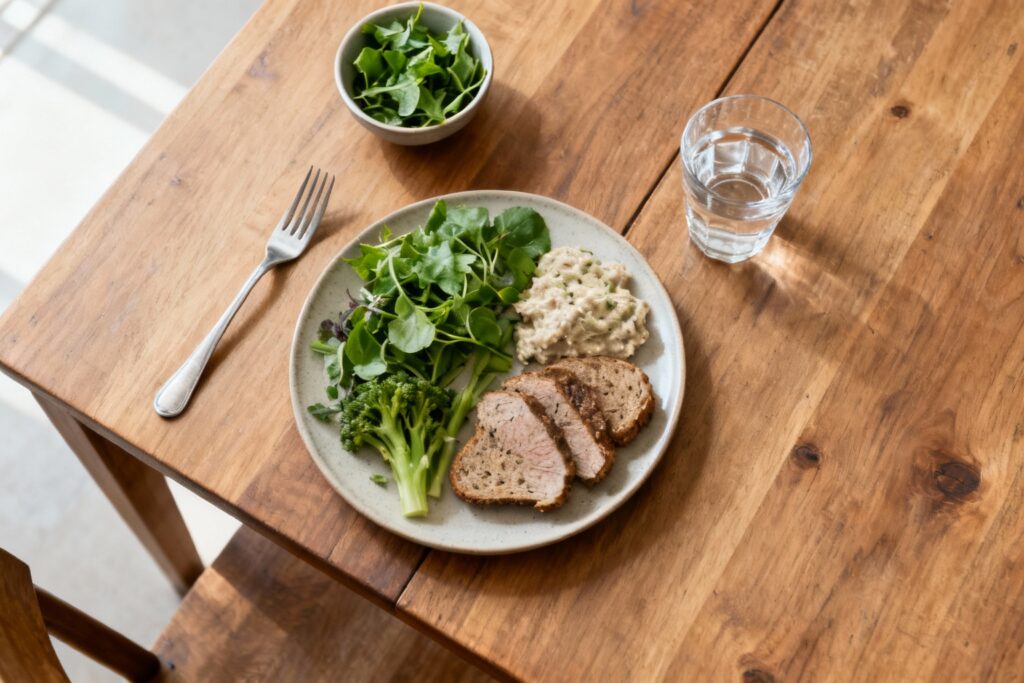
1. Build the Anti-Stress Plate
Half veggies. A quarter protein. A quarter whole grains. A little healthy fat. This structure steadies your blood sugar so your stress hormone doesn’t “panic.” Start with one meal today — lunch works best.
Action: Make your next plate 50% veggies, 25% protein, 25% whole grains.
2. Eat Within Two Hours of Waking
Breakfast isn’t optional for your hormones. It anchors your cortisol curve for the day. Research shows blood sugar stability early on reduces afternoon crashes — and the anxiety that comes with them.
Action: Aim for protein + carbs in the morning.
3. Add Fermented Foods Daily
Stress disrupts your gut. And your gut talks to your HPA axis. A gentle probiotic source interrupts the cortisol–gut inflammation loop.
Action: Add 2 tablespoons of yogurt, kimchi, or sauerkraut to lunch or dinner.
4. Prioritize Magnesium-Rich Foods
Magnesium is basically your nervous system’s weighted blanket. It helps your body shift from fight or flight to rest and digest.
Action: Add spinach, pumpkin seeds, or dark chocolate (the good 70% one)) to one meal.
5. Choose Omega-3s for Calm
Omega-3s lower inflammation — one of the sneaky reasons cortisol stays high. Fatty fish, walnuts, and chia seeds help your brain regulate stress more gracefully.
Action: Add 1 tablespoon chia to your smoothie or oatmeal.
6. Keep Meals Every 3–4 Hours
Your body reads long gaps as danger, which triggers cortisol. Eating in gentle rhythms keeps your hormones relaxed and grounded.
Action: Set a soft meal reminder on your phone.
7. Make Lunch Your Biggest Meal
Your digestion is strongest midday. Cortisol is naturally higher then, supporting nutrient absorption. A large dinner, especially late, keeps cortisol elevated at night.
Action: Build your most nourishing plate at lunch this week.
8. Sip Green Tea for L-Theanine
L-Theanine and magnesium together? A dreamy combo for calm. This pair increases GABA, serotonin, and dopamine — your “peace” neurotransmitters.
Action: Swap one coffee for green tea if you can.
9. Avoid the Foods That Spike Cortisol
Sugar crashes, caffeine overload, and skipping meals all force your body into stress mode. Even small reductions help.
Action: Replace one sugary snack with nuts + berries.
10. Create a Calm Meal Environment
Your nervous system matters as much as the food. Eating in chaos keeps cortisol high — eating in quiet helps it drop.
Action: Take one slow breath before eating today.
A Gentle Tool That Makes All This Easier

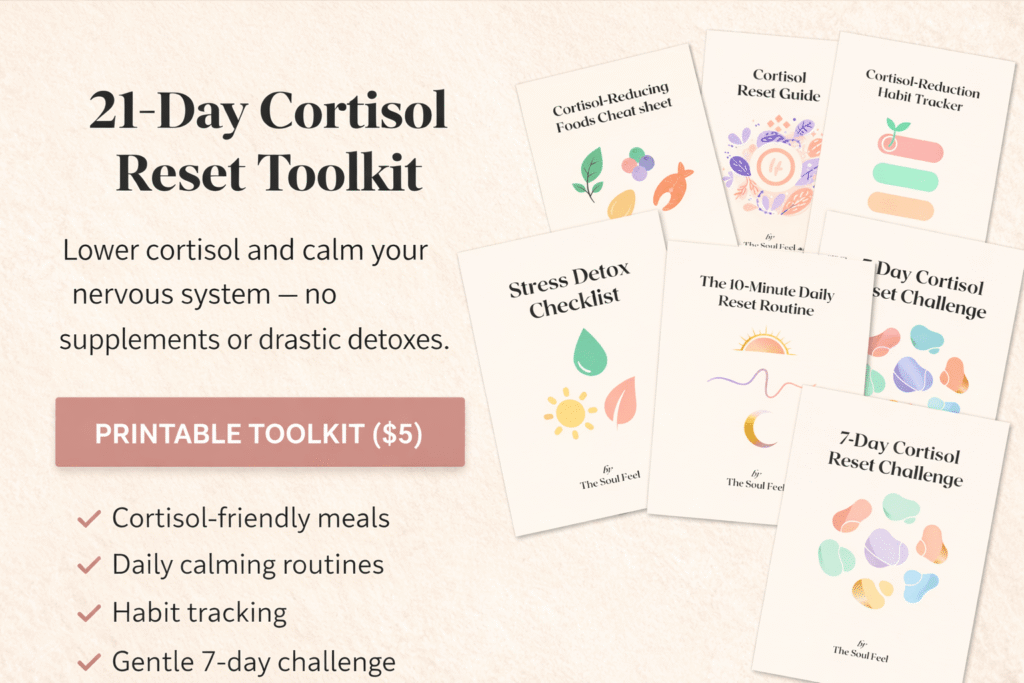
If you want a simple way to apply the cortisol reduction diet without overthinking, my 21-Day Cortisol Reset Toolkit fits beautifully into this lifestyle. It’s beginner-friendly, printable, and realistic. It teaches you how to stabilize blood sugar, follow calming meal rhythms, build cortisol-friendly plates, and create slow-living routines that actually reset your stress response. And every tool inside takes about 5–10 minutes a day.
Explore it here: 21-Day Cortisol Reset Toolkit for Stress Relief & Hormone Balance
How to Start Today
- Eat within two hours of waking.
- Build one Anti-Stress Plate for lunch.
- Add one fermented food today.
- Reduce caffeine slightly.
- Keep a gentle meal rhythm every 3–4 hours.
Quick Answer
A cortisol reduction diet supports healthy stress levels by stabilizing blood sugar, improving gut balance, and nourishing the nervous system with whole foods. It emphasizes steady meal timing, balanced plates, fermented foods, magnesium-rich vegetables, and calming nutrients like omega-3s and L-theanine to naturally lower cortisol throughout the day.
Conclusion
A cortisol reduction diet doesn’t need perfection — just small, steady shifts that help your body feel safe again. Start with plate balance, gentle meal timing, and calming foods that lower inflammation. One soft step today is enough to change your whole rhythm.
With love.