
For a long time, I thought my body was the problem.
My weight hadn’t changed much, but my belly felt different.
Softer. Puffier. More inflamed.
No matter how “healthy” I ate or how disciplined I tried to be, that area just wouldn’t respond.
I assumed I needed:
- better workouts
- stricter food rules
- more consistency
But none of that helped — and some of it made things worse.
If Your Belly Changed During a Stressful Season
Here’s what finally clicked for me:
My belly didn’t change during a happy, calm chapter of life.
It changed during chronic stress.
Long-term pressure.
Poor sleep.
Emotional overload.
Always being “on.”
That’s when my body started holding on.
A Quick Note Before We Go Deeper
If you’re noticing belly weight that showed up alongside fatigue, anxiety, sleep issues, or sugar cravings, cortisol is often involved.
I later created a gentle 👉 21-Day Cortisol Reset Toolkit to support stress hormones through food, routines, and nervous-system care (no supplements, no extremes).
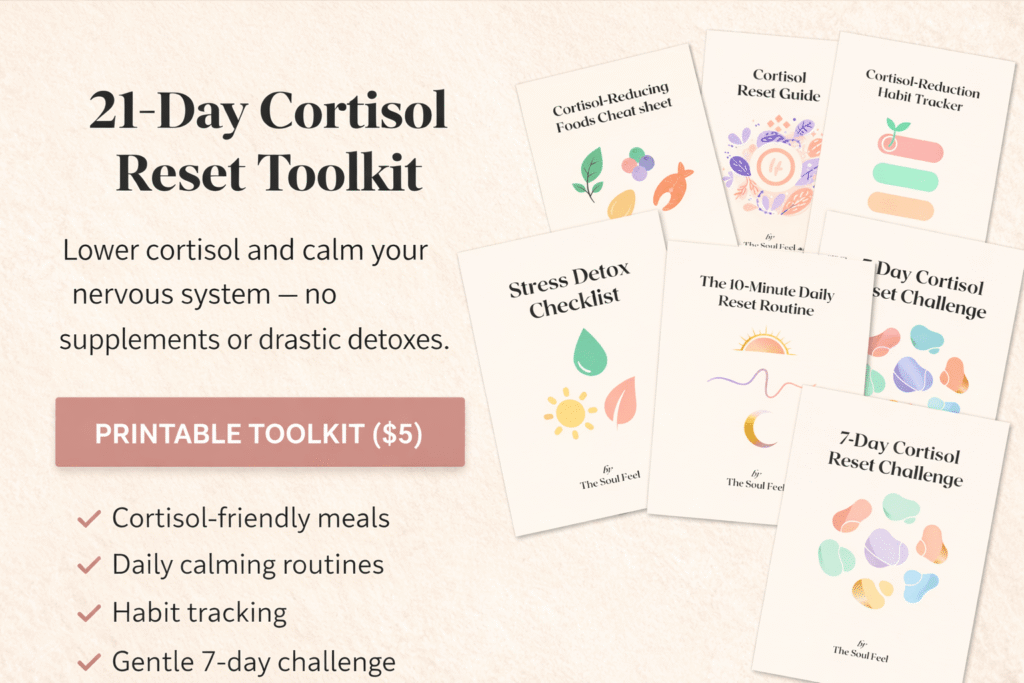
You can explore it anytime — but let’s first understand what’s actually happening.
What “Cortisol Belly” Really Means
Cortisol is your body’s main stress hormone.
When stress is short-term, cortisol rises and falls naturally.
But when stress becomes constant, cortisol stays elevated — and your body adapts to survive.
One of the ways it adapts is by:
- holding fat around the abdomen
- increasing inflammation
- protecting energy reserves
This isn’t about vanity or willpower.
It’s about protection.
Why the Belly Is Often the First Place
The abdominal area has more cortisol receptors than many other parts of the body.
So when cortisol stays high:
- fat storage is encouraged there
- bloating and water retention increase
- digestion slows
- inflammation becomes more noticeable
That’s why this kind of belly often feels:
- swollen rather than “fat”
- sensitive
- resistant to dieting
Why Dieting Made Mine Worse
This part surprised me the most.
Every time I tried to:
- restrict calories
- cut carbs aggressively
- push harder with workouts
My stress increased — and so did my symptoms.
From the body’s perspective:
- restriction = danger
- overexertion = danger
- constant pressure = danger
So cortisol stayed high.
The belly wasn’t refusing to change.
It was responding exactly as it was designed to.
The Shift That Helped My Body Let Go
Things didn’t change when I tried to control my body.
They changed when I started supporting it.
I focused on:
- stabilizing meals instead of restricting
- gentler movement
- better sleep rhythms
- daily calming signals for my nervous system
This is the same approach I later organized into my Cortisol Reset Toolkit — because stressed bodies don’t need punishment, they need reassurance.
What Helped Reduce the “Stress Belly” Feeling
Here are a few things that helped over time:
- eating balanced meals regularly
- avoiding extreme fasting during high-stress periods
- prioritizing sleep over intense workouts
- practicing daily calming routines (even 5–10 minutes)
Nothing changed overnight.
But slowly, the inflammation softened.
And my body stopped feeling like it was under attack.
If You’re Blaming Yourself — Please Pause
Cortisol belly isn’t a failure.
It’s a signal.
A signal that your body has been carrying too much for too long.
And signals can be responded to — gently.
A More Compassionate Way Forward
If your belly changed during stress:
- stop trying to “fix” it aggressively
- stop assuming you did something wrong
- start supporting your stress response
Weight shifts when safety returns.
Not when pressure increases.
Additional Support
If you want a calm, printable structure to support cortisol balance, my 👉 21-Day Cortisol Reset Toolkit includes:
- cortisol-friendly meals
- gentle daily routines
- nervous system support
- habit tracking for stress, sleep, and inflammation
Use it as slowly as you need.