
Feeling like your face looks rounder or puffier lately? Moon face cortisol changes can make your cheeks fuller and your skin dull. You’re not imagining it. This guide explains why cortisol can reshape your face and gives gentle, science-backed steps to reduce puffiness and restore your glow with routines you can start today.
What Is Moon Face Cortisol?
Moon face cortisol describes a round, puffy facial appearance linked to elevated cortisol or long-term steroid exposure. A similar look appears in Cushing’s syndrome, but milder forms can happen in everyday stress. Chronic stress, poor sleep, and disrupted circadian rhythms can all contribute to this fullness.

Causes — Why It Happens and Why It Matters
High or prolonged cortisol affects fluid balance, fat storage, and collagen integrity. That means more sodium retention, persistent facial swelling, and thinner skin over time. These changes are signals from your body that your stress system needs support, not cosmetic flaws. Research also shows cortisol influences how the skin repairs itself, especially at night.
Best Moon Face Cortisol Tips

1. Sleep Consistency
Good sleep resets your cortisol rhythm and allows skin repair. Deep sleep helps restore collagen and balance inflammation.
Try today: Pick a bedtime and stick to it. Even 15 minutes earlier helps.
2. Calm Breath Breaks
Slow breathing lowers immediate cortisol spikes. It signals the nervous system to shift into “rest mode.”
Try today: Do the 4-7-8 breath for two minutes after lunch.

3. Gentle Morning De-Puff Routine
Cold compresses or chilled spoons help move retained fluid and reduce swelling.
Try today: Press chilled spoons under your eyes for 60 seconds.
4. Reduce Sugar and Refined Carbs
Sugar spikes blood sugar and cortisol together, worsening puffiness.
Try today: Swap one sugary snack for nuts or yogurt.
5. Gentle Movement
Yoga, Pilates, and walking lower cortisol more effectively than intense cardio during stress periods.
Try today: Do a 10-minute stretch before bed or after waking.
6. Protect Your Evening Rhythm
Blue light disrupts melatonin and keeps cortisol elevated at night.
Try today: Turn off screens one hour before sleep.

7. Targeted Herbal & Mineral Support
Ashwagandha (500–600 mg) and magnesium support cortisol regulation and nervous system balance.
Try today: Ask your healthcare provider whether these are right for you.
How to Start Today
- Turn off screens 60 minutes before bed.
- Do 2 minutes of slow breathing tomorrow morning.
- Use a cold spoon or gua sha for quick de-puffing.
- Swap one sugary snack for a protein-rich option.
A Supportive Tool If You Want a Full Reset
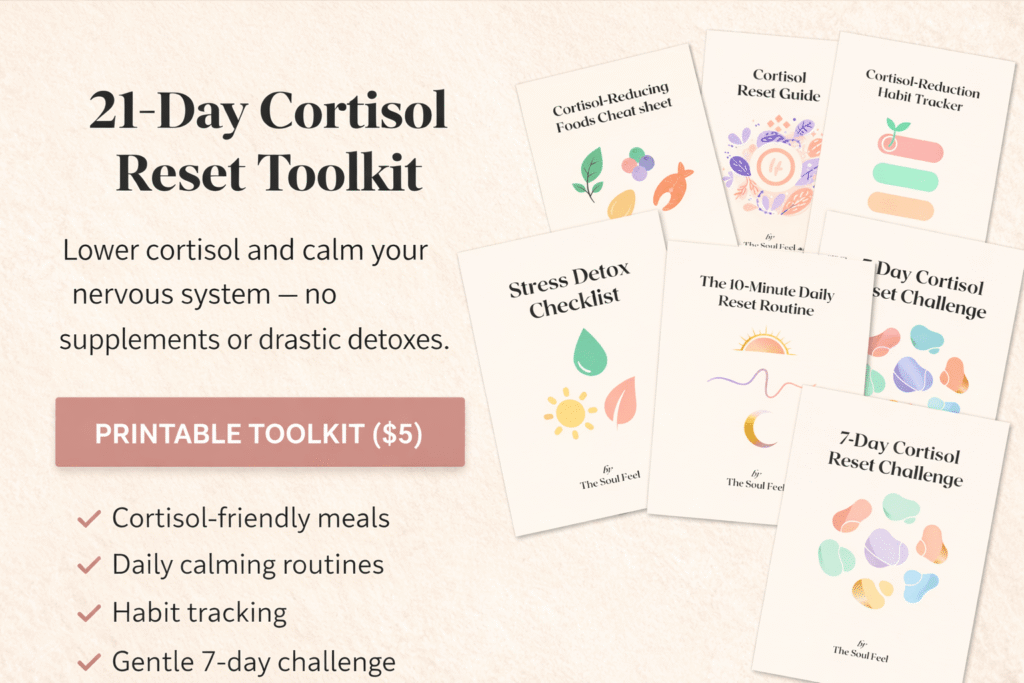
If you want a simple system to lower cortisol day by day, the 21-Day Cortisol Reset Toolkit gives you printable meal guides, a cortisol-lowering 7-day plan, nervous system resets, and daily routines you can follow without overwhelm. It’s perfect if you want steady progress with small steps you can actually stick to.
You can check here: 21-Day Cortisol Reset Toolkit for Stress Relief & Hormone Balance
Quick Answer
Moon face cortisol is facial puffiness and fullness caused by elevated cortisol or steroid exposure. You can reduce it by improving sleep consistency, lowering sugar and salt intake, practicing calming breathwork, and using morning cold therapy or lymphatic massage. Check with your healthcare provider to rule out medical causes.
My Experience
I once noticed my cheeks looked puffy after weeks of late nights and stress. When I fixed my bedtime and stopped eating sugar at night, the puffiness softened within two weeks. The tiny habits make a bigger difference than you expect.
Conclusion
Moon face cortisol is a message from your body that it needs gentler rhythms. Support your sleep, stabilize your meals, calm your nervous system, and try small morning de-puff routines. Start with one tiny shift today and build from there. Before long, your glow begins to return.
With love.
I believe in you.