
Feeling wired, tired, and not like yourself? Learning how to lower cortisol naturally can calm that cycle. This guide names the real reasons stress sticks, simple science-backed habits, and tiny steps you can start today. No overwhelm. Just small, steady practices that rebuild your rhythm and restore calm.
What Is How to Lower Cortisol Naturally?
Lowering cortisol naturally means using food, sleep, breathwork, gentle movement, nervous system support, and tiny daily shifts to restore hormone balance. It’s hormone healing through slow-living habits, not quick fixes. It’s about supporting the body so it remembers how to feel safe again.
Causes — Why It Happens and Why It Matters
Chronic stress keeps your HPA axis stuck in alert mode. Over time, cortisol rises at the wrong times or becomes flattened and inconsistent. This affects sleep, digestion, energy, immunity, mood, and metabolism. Supporting cortisol matters because it restores your natural rhythm and protects long-term health.
Best How to Lower Cortisol Naturally Tips
Below are gentle, practical habits you can start today. Choose one and build slowly.
1. Sleep as Medicine
Sleep resets your stress hormones and restores your HPA axis. Deep uninterrupted sleep brings cortisol down and helps you wake with steadier energy. The goal isn’t just 7–9 hours but continuous, restful sleep.
Tiny step: Choose one consistent bedtime this week.
2. Stabilize Blood Sugar
Blood sugar crashes spike cortisol. When meals are steady and nourishing, your body feels safe. Protein, fiber, and healthy fats stabilize glucose and reduce stress reactivity.
Tiny step: Add one palm-sized protein portion to today’s snack.
3. Daily Breathwork
Slow breathing activates the vagus nerve and calms your stress response within minutes. It increases HRV, supports parasympathetic activation, and helps your nervous system soften.
Tiny step: Try 4–4–4–4 box breathing for three minutes.
4. Nature Grounding
Nature quickly lowers cortisol. Sunlight, open space, and quiet surroundings signal safety. Even five minutes outdoors helps your nervous system reset.
Tiny step: Walk barefoot on grass for a few minutes.
Image no.3
5. Gentle Movement
When you’re stressed, intense workouts may worsen cortisol spikes. Gentle movement discharges tension without overwhelming the body. Walking, stretching, yoga, and slow swimming help your system unwind.
Tiny step: Stretch for ten minutes today.
6. Omega-3s and Anti-inflammatory Foods
Healthy fats and fiber support the gut-brain axis and reduce inflammation, which directly affects cortisol. Omega-3 sources like salmon, chia, flax, and walnuts help stabilize mood and stress levels.
Tiny step: Add a spoonful of ground flaxseed to a meal.
7. Thoughtful Adaptogens
Adaptogens like ashwagandha, rhodiola, and L-theanine may support cortisol balance when used carefully. They work best alongside sleep, nutrition, and lifestyle changes.
Tiny step: Ask your healthcare provider whether one of these is right for you.
8. Cold Water Micro-Resets
A brief cold burst trains your nervous system to recover quickly. Cold water triggers a calming reflex and improves vagal tone over time.
Tiny step: Rinse your face or end your shower with 30 seconds of cool water.
9. Complete the Stress Cycle
Chronic stress often leaves emotional responses unfinished. Somatic work helps your body complete what stress interrupted, releasing stored tension.
Tiny step: Spend 30 seconds noticing one area of tightness. Breathe into it gently.
10. Tiny Habits That Stick
Consistency matters more than intensity. Small daily actions create long-term change and retrain your stress response.
Tiny step: Choose one habit and track it for seven days.
How to Start Today
Here’s a simple four-step plan to begin without overwhelm:
- Choose one anchor: consistent bedtime or five minutes of breathwork.
- Stick with it daily for a week.
- Add one food shift, like protein at snacks or an omega-3 source.
- Each morning, note one change: sleep, mood, cravings, or energy.
A Gentle Tool to Guide You
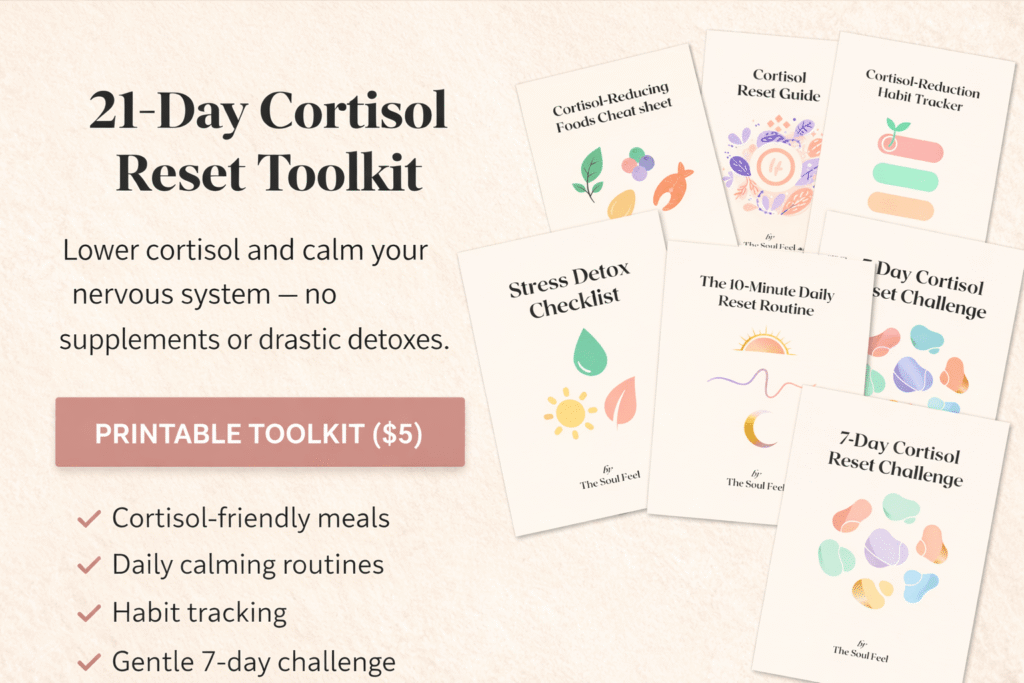
If you want a simple, printable, beginner-friendly way to apply these habits, my 21-Day Cortisol Reset Toolkit gives daily routines, meal ideas, calming micro-habits, and a trackable system that fits into busy days. It’s for you if you want calmer mornings, deeper sleep, fewer cravings, and a more stable mood—without overwhelm or supplements.
You can explore it here: 21-Day Cortisol Reset Toolkit for Stress Relief & Hormone Balance
Quick Answer
How to lower cortisol naturally: Prioritize consistent sleep, nourishing meals, slow breathwork, gentle movement, nature exposure, and supportive nutrients like omega-3s. These habits retrain the nervous system, reduce inflammation, and bring cortisol back into balance. Start with one tiny habit this week and build slowly.
Conclusion
Lowering cortisol naturally is a slow, steady process built on sleep, nourishment, breathwork, grounding, and tiny daily habits. These practices restore your rhythm, calm your nervous system, and rebuild your energy. Start with one shift today and let it carry you forward.