
For a long time, I believed effort was the answer.
If I felt tired, I pushed harder.
If I felt anxious, I added discipline.
If my body resisted, I assumed I wasn’t doing enough.
So I worked out more.
Ate “cleaner.”
Tried to optimize everything.
And somehow… I felt worse.
When Effort Starts Backfiring
There’s a moment when pushing stops helping.
For me, it looked like:
- constant fatigue
- soreness that never fully resolved
- trouble sleeping
- feeling wired instead of energized
I kept telling myself:
This is what progress feels like.
It wasn’t.
It was stress.
A Quick Pause (If You’re Here Because You’re Exhausted)
If you’re:
- doing all the “right” things
- staying consistent
- trying to be disciplined
but still feel depleted — cortisol may be part of the picture.
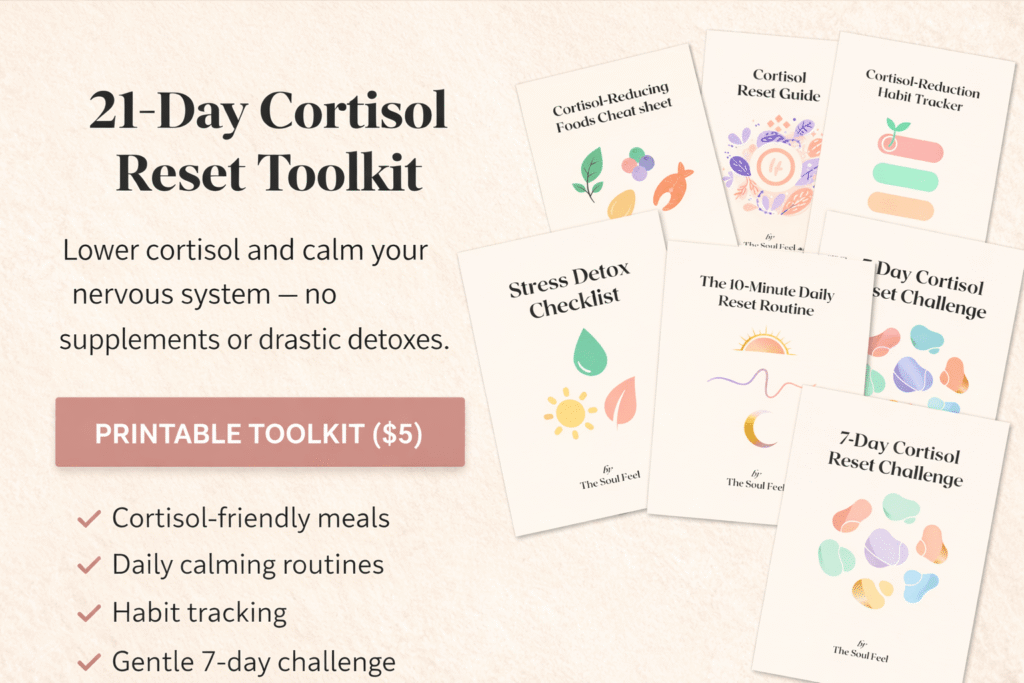
I eventually created a gentle 👉 21-Day Cortisol Reset Toolkit to help support stress hormones through food, rest, and nervous-system care (no supplements, no extremes).
You don’t need it to keep reading — but if structure helps you stop overthinking, it’s there.
Now let’s talk about what changed.
Why Pushing Can Raise Cortisol
Cortisol rises anytime your body senses demand.
That includes:
- intense workouts
- undereating
- fasting during stress
- constant productivity
- emotional pressure
In short bursts, this is fine.
But when stress is layered on stress, the body doesn’t recover — it stays alert.
So instead of feeling stronger, you feel:
- depleted
- inflamed
- restless
- disconnected from your body
That’s not laziness.
That’s overload.
The Moment I Realized I Was Making It Worse
The biggest shift wasn’t physical.
It was mental.
I stopped asking:
“How do I push through this?”
And started asking:
“What does my body actually need right now?”
The answer was rarely “more.”
What Doing Less Actually Looked Like
Doing less didn’t mean giving up.
It meant:
- choosing gentler movement
- taking rest days seriously
- eating enough even on “off” days
- prioritizing sleep over performance
- allowing my nervous system to downshift
At first, it felt uncomfortable.
Rest can feel unsafe when your body is used to stress.
But slowly, something changed.
When My Nervous System Finally Felt Safe
As I reduced pressure, my body responded.
Not instantly — but steadily.
- sleep became deeper
- energy felt more stable
- anxiety softened
- my body stopped fighting me
This is when cortisol started to come down.
And this philosophy — support over force — became the foundation of my Cortisol Reset Toolkit.
Because stressed bodies don’t need motivation.
They need reassurance.
If Slowing Down Feels Scary for You
That makes sense.
Many of us learned that rest equals:
- falling behind
- losing control
- being lazy
But when cortisol is high, slowing down is regulation, not regression.
It’s how the body recalibrates.
A Kinder Way to Support Your Body
If pushing isn’t working:
- stop adding more pressure
- stop judging yourself for needing rest
- start listening instead
Lowering cortisol often looks like:
- gentler days
- predictable routines
- fewer extremes
- more safety signals
That’s when healing begins.
Optional Support
If you want a calm, printable structure to support cortisol balance without pushing harder, my 👉 21-Day Cortisol Reset Toolkit includes:
- gentle daily routines
- cortisol-friendly meal guidance
- nervous-system support
- habit tracking for energy, stress, and rest
Use it slowly. No deadlines.