
For a long time, I thought I was just an anxious person.
My mind wasn’t always racing.
I wasn’t constantly overthinking.
But my body felt unsettled — almost buzzing.
Tight chest.
Shallow breathing.
A sense of urgency I couldn’t explain.
Everyone said, “Just calm down.”
I tried.
It didn’t work.
When Anxiety Feels Physical, Not Mental
What confused me most was this:
My thoughts were often reasonable.
But my body didn’t agree.
I could tell myself:
- You’re safe.
- Nothing is wrong.
- You’re overreacting.
And yet my heart still raced.
My stomach still tightened.
My shoulders still stayed tense.
That’s when I realized — this wasn’t just anxiety.
A Quick Pause (If This Sounds Familiar)
If your anxiety feels more like:
- internal restlessness
- physical tension
- nervous energy
- feeling “on edge” for no clear reason
Cortisol is often involved.
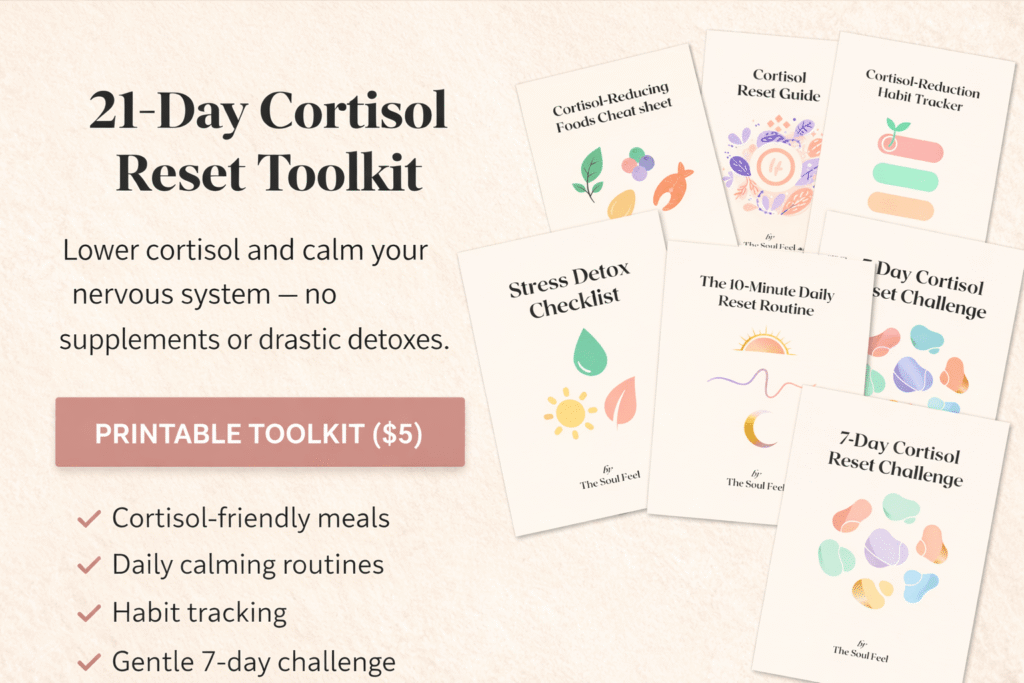
I later created a gentle 👉 21-Day Cortisol Reset Toolkit to help calm stress hormones through food, daily routines, and nervous-system support (no supplements, no extreme practices).
If structure helps you feel less overwhelmed, it’s there.
Now let’s unpack what’s actually happening.
How High Cortisol Can Mimic Anxiety
Cortisol’s job is to keep you alert.
When there’s danger, it:
- raises heart rate
- sharpens focus
- prepares the body to respond
That’s helpful — temporarily.
But when cortisol stays elevated, your body stays in alert mode, even when nothing is wrong.
So it can feel like:
- anxiety without anxious thoughts
- panic without a trigger
- tension without a reason
You’re not imagining it.
Your nervous system is overstimulated.
Why “Calming Thoughts” Didn’t Help Me
This was one of the most frustrating parts.
Mindset tools helped a little — but not enough.
Because you can’t think your way out of a body that’s stuck in stress mode.
When cortisol is high:
- the body doesn’t register safety
- relaxation feels unfamiliar
- stillness can feel uncomfortable
That’s why telling yourself to “relax” often makes things worse.
The Shift That Made Anxiety Feel Manageable Again
Things started to change when I stopped trying to fix my thoughts and started supporting my stress response.
I focused on:
- regular meals to stabilize blood sugar
- gentler mornings
- less stimulation in the evening
- daily calming signals for my nervous system
Slowly, my body stopped sounding the alarm.
This approach is what later shaped my Cortisol Reset Toolkit — because real calm comes from regulation, not mental effort.
Signs Anxiety Might Be Cortisol-Driven
Here are a few signs that stood out for me:
- anxiety feels physical, not mental
- symptoms are worse when tired or hungry
- restlessness increases at night
- caffeine or stress makes everything spike
This doesn’t mean your anxiety “isn’t real.”
It means your body needs support — not judgment.
What Helped Lower the Physical Anxiety
What helped wasn’t eliminating anxiety completely.
It was reducing its intensity.
Small changes that mattered:
- eating before caffeine
- slowing down transitions during the day
- practicing short nervous-system resets
- prioritizing sleep consistency
These didn’t make me emotionless.
They made me steady.
If You’ve Been Blaming Yourself
Please hear this:
You’re not weak.
You’re not broken.
You’re not failing at calm.
A stressed nervous system creates anxious sensations — even when life looks “fine” on the outside.
And that can be addressed gently.
A Kinder Way to Support Anxiety
If anxiety feels physical for you:
- stop forcing calm
- stop fighting your body
- start helping it feel safe again
That’s when the edge softens.
Additional Support
If you want a simple, printable way to support cortisol and nervous-system balance, my 👉 21-Day Cortisol Reset Toolkit includes:
- cortisol-friendly meals
- calming daily routines
- nervous-system support practices
- habit tracking for stress, sleep, and mood
Use it slowly. No pressure.