
For a long time, I thought I was doing everything right.
I ate “clean.”
I avoided sugar.
I tried to be disciplined with food.
And yet… I was exhausted all the time.
Anxious for no clear reason.
Wired at night, drained in the morning.
It didn’t make sense — until I stopped blaming food and started looking at stress.
When “Eating Healthy” Still Doesn’t Help
If you’ve ever felt tired and overwhelmed despite eating well, you’re not alone.
I kept telling myself:
- Maybe I’m missing a nutrient
- Maybe I need a better diet plan
- Maybe I just need more willpower
But the truth was simpler — and more frustrating.
My body wasn’t struggling with food.
It was stuck in stress mode.
A Quick Note (If This Feels Familiar)
If you’re dealing with constant fatigue, anxiety, sugar cravings, poor sleep, or that “on-edge” feeling that never fully goes away, it’s often linked to cortisol dysregulation — not lack of discipline.
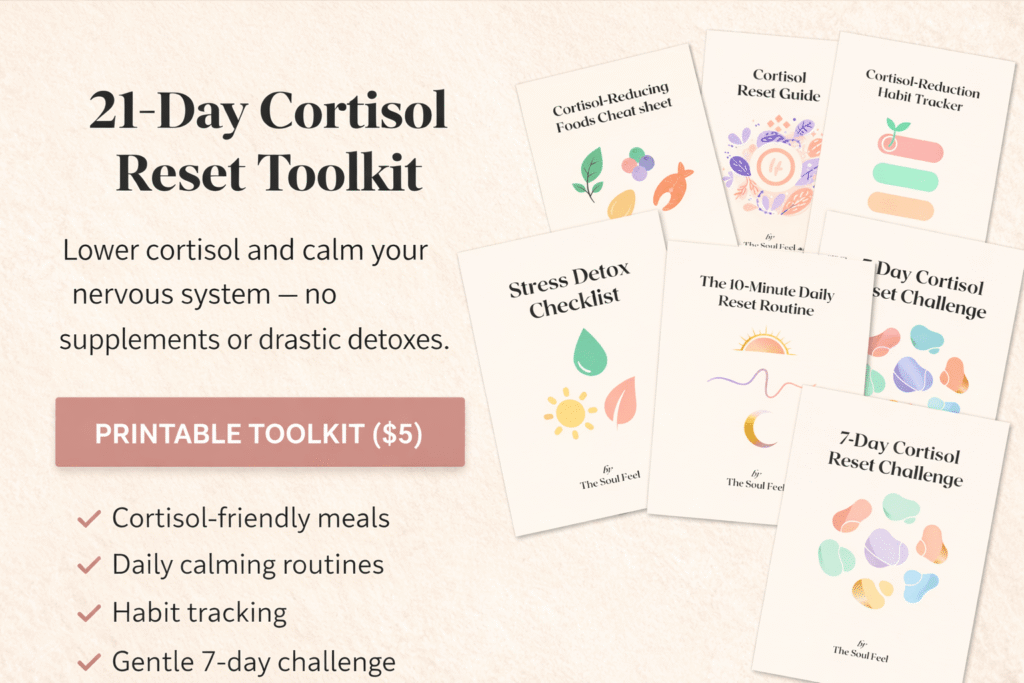
I put together a gentle 👉 21-Day Cortisol Reset Toolkit that helps calm stress hormones using food, habits, sleep routines, and nervous-system support (no supplements, no extreme rules).
You can check it out here if you want a simple structure to start with.
What Cortisol Actually Does (In Real Life Terms)
Cortisol isn’t “bad.”
It’s your body’s alert hormone.
It helps you:
- wake up in the morning
- respond to danger
- handle short-term stress
But when stress becomes constant, cortisol stays high — and that’s when things start breaking down.
High or dysregulated cortisol can:
- block real energy (even if you eat well)
- increase anxiety
- mess with blood sugar
- disturb sleep
- cause stubborn belly fat
- increase cravings
So even the best diet can feel useless if cortisol is running the show.
Why Diet Alone Didn’t Fix My Symptoms
Here’s what I didn’t understand for years:
When cortisol is high, your body prioritizes survival, not digestion, rest, or repair.
That means:
- nutrients don’t get used efficiently
- blood sugar swings become stronger
- hunger and cravings increase
- your nervous system stays on edge
So I wasn’t failing at health.
My stress response was overwhelmed.
The Shift That Changed Everything
Instead of asking:
“What should I eat?”
I started asking:
“What helps my body feel safe?”
That changed how I approached:
- meals
- movement
- sleep
- daily routines
And slowly — very slowly — things softened.
What Helped Lower My Cortisol (Without Extremes)
I didn’t overhaul my life.
I didn’t add supplements.
I didn’t follow strict protocols.
I focused on small, repeatable resets, like:
- stabilizing meals instead of restricting
- gentle morning routines
- lowering stimulation at night
- giving my nervous system predictable signals of safety
This is exactly why I later created my Cortisol Reset Toolkit — not as a “fix,” but as a support system for stressed bodies that don’t need more pressure.
If You’re Still Blaming Yourself — Please Don’t
One of the hardest parts of cortisol imbalance is the shame.
You think:
- Why can’t I just feel normal?
- Why is everyone else fine?
- Why isn’t my healthy lifestyle working?
But this isn’t about motivation or discipline.
It’s about regulation.
A Gentle Way Forward
If you suspect cortisol is behind your fatigue, anxiety, or constant stress:
- stop trying to “push through”
- stop adding more rules
- start supporting your body instead
Whether you use my toolkit or simply start paying attention to stress signals, the goal is the same:
👉 Help your body feel safe again.
That’s when energy, calm, and balance slowly return.
If You Want Structure (Optional)
If having a simple, printable system helps you stay consistent, my 👉 21-Day Cortisol Reset Toolkit walks you through:
- cortisol-friendly meals
- daily calming routines
- nervous system support
- habit tracking
- gentle resets that take 5–10 minutes
You can explore it whenever you’re ready.