
You’re here because you suspect your cortisol levels are higher than they should be. Maybe you feel wired at night, groggy in the morning, or strangely overwhelmed by tiny things. I’ve been there too, and it’s such a confusing place to live in. This guide will show you what’s really raising your cortisol and what you can actually do about it today.
What Is the Cortisol Crisis?
Cortisol is your body’s natural daytime hormone. It wakes you up. It gets you moving. But modern life pushes that hormone far beyond its healthy rhythm.
This chronic elevation is a kind of stress dysregulation that sneaks into your day through screens, food, noise, and even how you multitask. It doesn’t feel dramatic. It just feels… off. Like you’re living slightly outside your own body.
Why This Happens (And Why It Matters)
When cortisol stays high for too long, your body slips into survival mode. Your sleep becomes lighter. Your blood sugar swings. Your cravings grow louder. Your mood feels thinner.
High cortisol disrupts hormone balance, especially the delicate dance between estrogen, progesterone, and insulin. Over time it creates that familiar cocktail: fatigue, anxiety, belly fat, irritability, and burnout.
And most of it comes from everyday habits that feel completely normal.
The Best Cortisol-Lowering Tips for Real Life
Digital Boundaries That Feel Like a Warm Hug
Your screens keep your brain “on” long after your body wants to soften. Blue light and notifications push cortisol even higher. A simple pause brings everything down.
Try dimming your screens earlier. Let your evenings feel like evenings again.
Do today: One hour before bed, go fully screen-free. Light a candle. Let your brain exhale.
Batch Your Tasks
Every time you switch tasks, your cortisol jumps a little. When you focus on one thing at a time, your whole body softens. You feel calmer, clearer, more present.
Do today: Choose one 90-minute window for deep focus. Nothing else.
Breakfast That Stabilizes Morning Cortisol
Skipping breakfast keeps cortisol high long past the morning peak. A balanced meal sends a gentle message: you’re safe.
Protein + fiber + healthy fat = steadier energy.
Do today: Eat within one hour of waking. Even something simple helps.
Reduce Ultra-Processed Foods
These foods trigger inflammation, gut imbalance, and blood sugar crashes—all of which raise cortisol quietly. Whole foods help your stress system settle.
Do today: Swap one ultra-processed snack for something real.
Gentle Movement to Break the Loop
Your body wasn’t built for sitting all day. Light movement resets the system. Even a tiny stretch feels like fresh air inside your cells.
Do today: Stand up every 30 minutes and move for two minutes.
Moderate Exercise, Not Punishing Workouts
Daily high-intensity workouts feel productive, but your hormones see them as stress. Your body craves gentler cycles with true recovery.
Do today: Replace one intense workout with a slow, cozy walk.
Nighttime Light Hygiene
Blue light keeps cortisol higher than it should be. Soft, warm lighting tells your body it’s safe to power down.
Do today: Switch to warm lamps after sunset.
Quieting the Noise
Your nervous system responds to sound even when you don’t. Silence feels like a warm blanket for your brain.
Do today: Use soft background sounds or earplugs during focused work.
Financial Stress Support
Money worries keep the stress cycle open. Your body doesn’t know the threat is “psychological.” Naming the stress helps. Tiny steps help even more.
Do today: Write down one small financial task you’ve been avoiding.
A Gentle Tool to Reset Your Whole Cortisol Rhythm
If you’ve been feeling wired at night, anxious, overwhelmed, or just not like yourself, it’s not your fault. Modern life pulls cortisol out of balance in dozens of hidden ways.
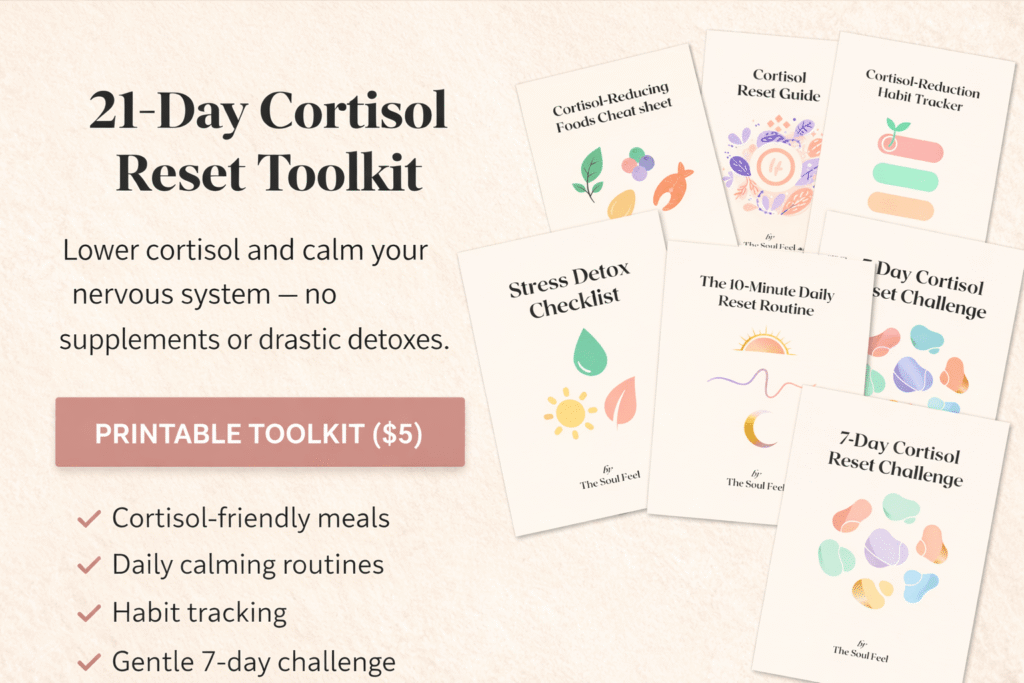
That’s why I created the 21-Day Cortisol Reset Toolkit — a simple, printable system for beginners to restore calm, balance hormones, and steady your nervous system. It includes meal guides, daily resets, routines, trackers, and a full plan to bring your cortisol curve back into a healthy rhythm.
It’s soft, simple, and easy to follow, even on busy days.
Explore it here: 21-Day Cortisol Reset Toolkit for Stress Relief & Hormone Balance
How to Start Today
You don’t need a full overhaul. Just gentle shifts.
- Eat a protein-rich breakfast tomorrow.
- Turn off screens one hour before bed.
- Swap one ultra-processed item for something whole.
- Move lightly every 30 minutes.
- Pick one slow, cozy evening ritual.
Quick Answer
Modern life raises cortisol through screens, blue light, processed foods, multitasking, irregular sleep, financial stress, and constant notifications. These everyday stressors disrupt your natural rhythm, keeping levels high at night and low in the morning. Gentle habits like breakfast, digital boundaries, movement breaks, and dim evening lighting help restore balance.
Conclusion
Your cortisol levels aren’t rising because you’re weak or doing life wrong. They’re rising because modern life overwhelms even the calmest nervous systems.
The good news: your body responds beautifully to small, warm, consistent changes. Start with one. Let it settle. Then add another.
You’re not alone in this. And you’re not broken.
With love.