
If you’ve been wondering “is cortisol making you gain weight?” you’re not alone. That stubborn belly softness, those late-night cravings, that wired-but-tired feeling… they all point toward one thing: dysregulated cortisol. And once you understand the pattern, you can finally support your body with calm, steady habits that melt stress from the inside out.
What Is Cortisol Weight Gain?
Cortisol weight gain is belly-centered fat that forms when stress hormones stay elevated for too long. It’s different from regular weight changes because it comes from a disrupted cortisol rhythm, not overeating or lack of willpower. Many women call it “stress belly,” especially when the weight sits low and firm around the abdomen.

Why It Happens (and Why It Matters)
When cortisol spikes often, your body stores fat around your abdomen to “protect” you. Blood sugar becomes unstable. Cravings intensify. Sleep feels messy. The whole system shifts into survival mode.
And yes—cortisol weight gain shows up fast when this rhythm is off.
Prolonged high cortisol increases visceral fat, the dangerous type around your organs (Harvard Health, Cleveland Clinic). It’s not a cosmetic issue. It’s a hormonal one.
Best Cortisol Weight Gain Tips to Support Your Hormones
1. Balance Your Blood Sugar
Blood sugar swings feel like emotional swings. The crashy, shaky, snack-hunting feeling? That’s cortisol stepping in to rescue you and storing fat while doing it. A simple plate structure—protein, fiber, healthy fats—keeps things steady.
Try this: Add a handful of nuts or seeds to your breakfast.

2. Protect Your Morning Cortisol Peak
Your body needs a healthy cortisol rise in the morning. It wakes you. It fuels you. But scrolling in bed or skipping breakfast flattens the curve.
Try this: Step outside for two minutes of natural light.
3. Support Evening Cortisol Decline
Evenings shape your hormone rhythm. But screens keep cortisol high. Bright lights keep it high. Overthinking keeps it high))
Try this: Dim lights after sunset. One lamp. Soft glow.
4. Choose Gentle Movement
Your body loves slow workouts on stressful days. Walking, Pilates, yoga—these send a “you’re safe now” signal. Intense workouts can spike cortisol, especially when you’re already on edge.
Try this: A 10-minute walk after meals.

5. Nourish Your Gut
A stressed gut talks nonstop with stressed hormones. Bloating, cravings, random breakouts—everything is connected.
Try this: Add a spoonful of fermented food each day.
6. Eat Enough (Especially When Stressed)
Undereating spikes cortisol. Your body senses scarcity and protects you by holding fat.
Try this: Add one balanced snack on busy days.
7. Keep Evenings Low-Stimulation
Your evening environment tells your hormones whether to relax or keep fighting.
Try this: Swap late scrolling for a warm shower.
8. Regulate Through Breath
Deep breathing lowers cortisol within minutes. It softens your nervous system and slows your thoughts.
Try this: Exhale longer than you inhale.
9. Protect Your Sleep Window
Cortisol and melatonin rise and fall together. If one is off, the other tumbles. Waking between 2–4 a.m. is a classic cortisol imbalance sign.
Try this: Keep a consistent sleep window.

10. Use a Cortisol Reset Toolkit
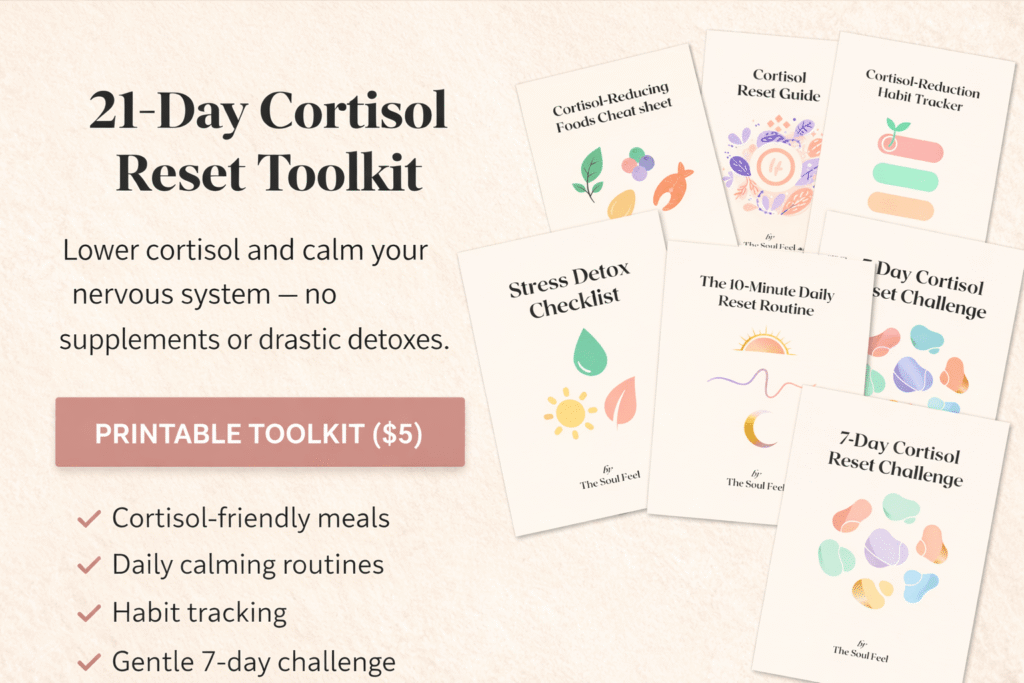
If you want a done-for-you system to fix your cortisol rhythm, my 21-Day Cortisol Reset Toolkit is a beautiful place to begin. It’s gentle, beginner-friendly, and so grounding.
You get meal guides, morning routines, nervous system tools, a habit tracker, and a printable 7-day challenge—everything designed to lower cortisol naturally. I built it during my own stress spiral because I needed something simple… and it worked.
If your body is asking for calm, this toolkit feels like exhaling after holding your breath.
👉 21-Day Cortisol Reset Toolkit for Stress Relief & Hormone Balance
How to Start Today
Start small. Pick one shift. Let it ripple.
- Add protein to each meal.
- Go outside within 20 minutes of waking.
- Dim lights after sunset.
- Use long exhales when you feel stress rising.
Tiny steps shift cortisol more than you think.
Quick Answer
Is cortisol making you gain weight?
Yes. Cortisol can cause belly-centered weight gain when stress keeps levels high for too long. It disrupts blood sugar, increases cravings, affects sleep, and encourages visceral fat storage. Supporting your circadian rhythm, balancing meals, reducing evening light, and calming your nervous system can help reverse the pattern.

Conclusion
If you’ve been wondering “is cortisol making you gain weight?” the signs are clear and fixable. When you support your rhythm, nourish your blood sugar, and build gentle routines, your hormones begin to exhale. One small action today is enough to shift the entire pattern.
Check with your healthcare provider for personalized advice.
With love. I believe in you.