
Ever look in the mirror and think, “Why does my belly look stressed… even when I’m doing everything right?” If you’re trying to understand cortisol belly, you’re not alone. Many women feel this strange mix of exhaustion, cravings, bloating, and stubborn belly fat that simply won’t move.
I’ve been there too… tired but wired, overwhelmed, doing “all the right things,” yet still feeling puffy around the middle. Today, I’ll walk you through what’s truly happening — simply, gently — and how to begin reversing it.
What Is Cortisol Belly?
Cortisol belly is the midsection weight gain that appears when your stress hormone (cortisol) stays elevated for too long. It’s not random and it’s not just “regular” weight gain. It’s hormonal.
You may also hear it called stress belly fat or hormonal belly, but the cause is the same. It’s your body responding to chronic stress.
Why Cortisol Belly Happens
Chronic stress pushes cortisol higher, and your belly happens to have more cortisol receptors than almost anywhere else on your body. So when cortisol spikes, your midsection receives the signal the loudest.
This affects blood sugar, hunger hormones, sleep rhythm, cravings, and inflammation. Small everyday stressors — late nights, rushing, skipped meals, emotional pressure — can build up and create a hormonal loop that encourages belly fat storage.
Best Tips to Reduce Cortisol Belly
1. Morning Light Ritual
Morning light stabilizes your cortisol rhythm. When your morning cortisol peak is healthy, belly fat storage slows down.
Action step: Step outside for 3–5 minutes after waking. Just gentle light on your skin.
2. Balanced Breakfast
Skipping breakfast keeps cortisol elevated and increases cravings later. A protein-rich morning meal steadies blood sugar and calms hormonal stress.
Action step: Try eggs, yogurt, or chia pudding with protein.

3. Soft Evening Routine
High nighttime cortisol encourages belly fat storage. A slow, warm, cozy evening helps your stress hormones settle.
Action step: Dim your lights after sunset and avoid screens 1–2 hours before bedtime.
4. Gentle Movement
HIIT is great… but not during high-stress seasons. Intense workouts temporarily raise cortisol.
Action step: Replace one intense workout this week with a 20-minute walk, pilates, or yoga.

5. Deep Breathing
Slow breathing taps into your parasympathetic nervous system — your body’s natural “off switch.”
Action step: Try 4-4-4 breathing (inhale 4, hold 4, exhale 4).
6. Avoid Late-Night Eating
Eating at night raises cortisol and insulin at the wrong time. This encourages belly fat storage.
Action step: Finish eating 2–3 hours before bed.
7. Magnesium Glycinate
Magnesium helps calm cortisol and improve sleep quality. Better sleep = better hormonal balance.
Action step: Consider magnesium glycinate before bed (check with your doctor first).
8. Break the Craving Cycle
Cortisol belly often comes with sugar cravings. Balanced meals with protein, fiber, and healthy fats help stabilize hunger hormones.
Action step: Add nuts or seeds to your snacks to help regulate cravings.

9. 21-Day Cortisol Reset Toolkit
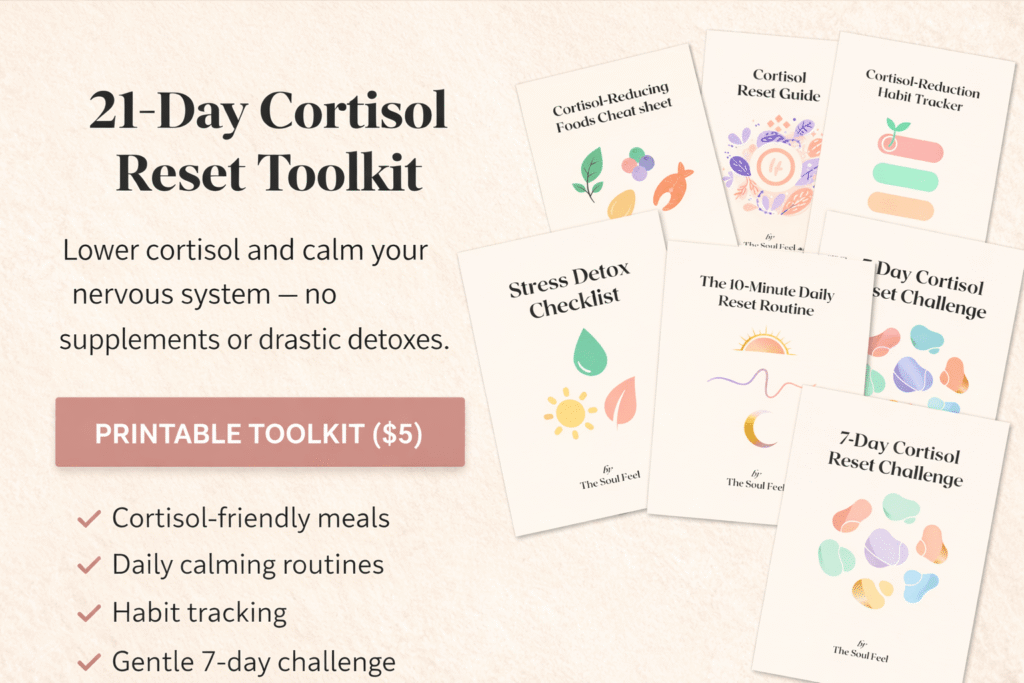
If you want a beginner-friendly way to lower cortisol fast, the 21-Day Cortisol Reset Toolkit gives you simple steps, food guidance, daily micro-resets, a habit tracker, and calming routines that gently repair your cortisol rhythm. It’s cozy, structured, and easy to follow — especially when your brain feels overwhelmed.
Action step: Explore the toolkit for guidance on meals, sleep, nervous system resets, and daily routines.
10. Earlier, Warmer Bedtimes
Nothing lowers cortisol belly faster than consistent, deep sleep.
Action step: Try a warm shower, lavender lotion, and low lighting as a nightly cue.

How to Start Today
– Step outside for morning sunlight
– Eat a protein-rich breakfast
– Replace one intense workout with a walk
– Dim lights after sunset
– Choose one tiny nervous system reset each day
Quick Answer
Cortisol belly is abdominal fat stored due to chronic stress and disrupted cortisol rhythms. High cortisol affects blood sugar, sleep, hunger hormones, and fat distribution. You can reduce it through balanced meals, gentle movement, morning light, earlier bedtimes, and simple nervous system support.
Conclusion
Cortisol belly isn’t a flaw. It’s a hormonal signal — and with calmer routines, balanced blood sugar, softer evenings, and stress-aware habits, your body slowly shifts out of storage mode.
If you want step-by-step support, the 21-Day Cortisol Reset Toolkit can help you start today.
A calm belly.
A calm mind.
A calm life.